Take a look at our newest merchandise

amzchef Espresso Machine with 20 Bar, Professional Espresso Maker with Milk Cream/Steam Stick, Compact Stainless Steel Coffee Machines, 34oz Household Detachable Water tank, Gift for Dad or Mom


Final summer time, my companion and I spent a weekend in Portland, OR, and eventually made a pilgrimage to Push X Pull, a extremely attention-grabbing participant in that heavenly espresso infused city. They’re recognized for his or her pure coffees, and let me let you know, we sampled a number of that completely made the journey worthwhile. Whereas speaking the ear off a barista there, he talked about a espresso processing methodology I hadn’t come throughout earlier than: the honey course of. Naturally, my curiosity was piqued. Was it only a intelligent identify to seize consideration (as a result of who doesn’t love honey?), or was it one thing legit?
This realization hit me: regardless of my love for espresso, I knew embarrassingly little about the way it goes from a cherry on a tree to the inexperienced beans roasted by my favourite native retailers. So, being the obsessive learner I’m, I went on a little bit of a mish.
I devoted a complete Area Notes pocket book to scribbling down all the pieces I may discover about espresso processing strategies. After all, the internets had been an enormous supply of my ongoing analysis together with diverse James Hoffmann vids, however actually, the perfect insights got here from speaking to precise roasters and inexperienced espresso patrons. (huge shoutout to Jim at Vita for patiently answering my naive questions!)
Now that my pocket book is full, I really feel like I do know simply sufficient to be harmful; or not less than sufficient to share what I discovered right here, on CoffeeGeek. However truthful warning: I’m not a roaster or an professional, only a curious espresso fanatic. So if I received one thing flawed, please drop a remark under and set me straight. I’m at all times up for studying extra!
The Basic Processing Strategies
Washed (Moist) Course of
In case you’ve ever loved a cup of espresso with a clear, crisp taste and vibrant acidity, likelihood is it was processed utilizing the washed methodology. Right here’s the way it works: After the cherries are harvested, the outer pores and skin is eliminated, and the beans are soaked in water for as much as 72 hours. Throughout this time, pure micro organism and yeast break down the sticky mucilage that adheres to the beans. As soon as the fermentation is full, the beans are washed totally and dried.
This meticulous course of highlights the inherent traits of the espresso bean, typically leading to flavors described as citrusy, floral, and even wine-like. It’s particularly in style in areas like Colombia, Guatemala, and Kenya, locations recognized for producing a number of the world’s most vibrant coffees.
Pure (Dry) Course of
The pure course of is the oldest methodology of processing espresso, and it’s nonetheless broadly used immediately, particularly in areas the place water is scarce, like Ethiopia, Yemen, and components of Brazil. That is the method that Push x Pull actually champions. How does it work?
As an alternative of eradicating the fruit instantly, entire cherries are unfold out in skinny layers below the solar and left to dry for a number of weeks. Because the cherries dry, sugars and different compounds within the fruit migrate into the beans, leading to a daring, typically fruity taste profile with notes of berries, tropical fruit, and as a rule, a touch of fermentation. These coffees typically have a heavier physique and decrease acidity in comparison with washed coffees.
Honey Course of
Yeah, that is the method that received me began on this studying journey. And I came upon it’s fairly complicated and diverse.
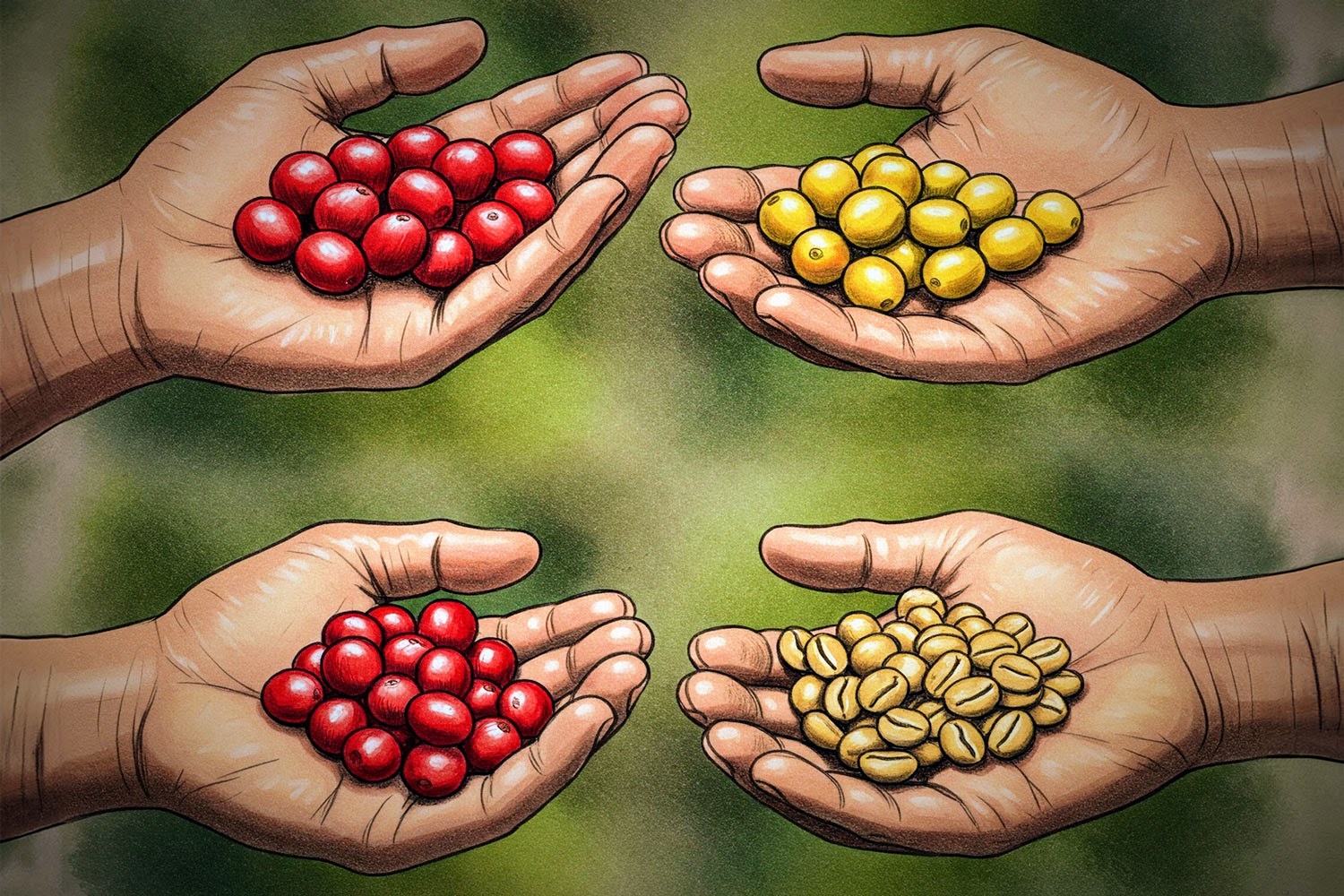
Consider the honey course of as a center floor between the washed and pure strategies. After the cherries are pulped to take away the outer pores and skin, the beans are dried with various quantities of mucilage left intact. The identify “honey” doesn’t discuss with the flavour however to the sticky texture of the beans throughout drying (difficult!)
This methodology can produce a variety of flavors relying on how a lot mucilage is left on the beans and the way they’re dried, and that is the place it will probably get much more complicated. Let’s break down the differing types:
- White Honey: Minimal mucilage left, resulting in a clear, gentle cup.
- Yellow Honey: Barely extra mucilage, leading to elevated sweetness.
- Crimson Honey: A thicker coating of mucilage, typically dried below shade, producing intense sweetness and a heavier physique (of all of the honey processed coffees, this can be my favourite).
- Black Honey: Probably the most mucilage left on the bean, dried in humid situations, making a syrupy, complicated espresso with wealthy fruit and fermented notes.
Costa Rica pioneered this course of, and it has since gained reputation in nations like Brazil and Colombia, and different rising areas are beginning to experiment with it as properly.
Pushing Boundaries: Experimental Processing Methods
And guess what: we haven’t even touched but on the actual experimental and modern processing strategies, however we’re about to get into some actually attention-grabbing strategies. Lately, these modern processing approaches have been shaking up the espresso world. These strategies intention to amplify or create new taste profiles, typically producing distinctive and thrilling outcomes.
Anaerobic Fermentation
This methodology entails fermenting espresso cherries or beans in sealed tanks with no oxygen. By controlling the setting, particular microorganisms thrive, producing distinctive flavors and aromas. Anaerobic coffees are recognized for his or her daring fruitiness, spice notes, and creamy texture.
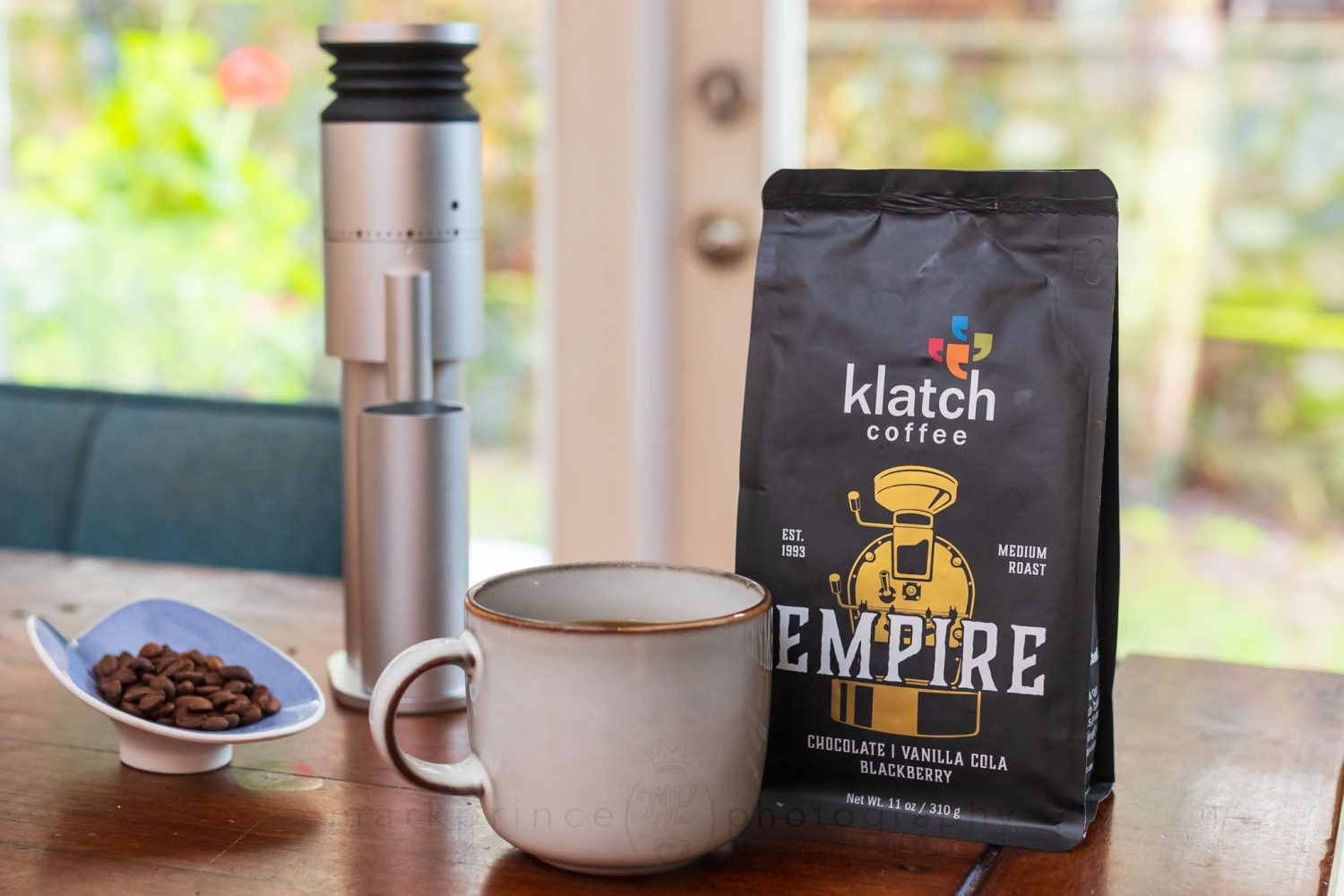
There’s a very attention-grabbing aspect impact from this methodology: the roasted coffees, when floor and brewed, will typically curdle milk! I’m telling you this, as a result of the roaster I purchased my first anaerobic fermentation espresso from (Klatch Espresso with their Empire Mix) didn’t make this recognized. That espresso is totally wonderful, (chocolate, vanilla, cola and blackberry notes!) nevertheless it scared me the primary time I attempted so as to add some cream to it – all of it curdled on prime!
Carbonic Maceration
It is a methodology I’ve not been capable of attempt but, and I’m in search of a very good supply. Borrowed from winemaking, carbonic maceration entails inserting entire espresso cherries in a tank full of carbon dioxide. This creates an inner fermentation course of, breaking down the fruit from the within out.
The end result? Supposedly it produces coffees with vibrant wine-like traits, intense sweetness, and juicy acidity. This course of has been embraced by forward-thinking farmers wanting to experiment with new taste profiles.
If you already know a very good espresso utilizing this processing methodology, let me know within the feedback under!
Thermal Shock
One other processing methodology I’ve but to attempt, however sounds actually thrilling. Thermal shock is precisely what it seems like—espresso cherries are uncovered to sudden temperature adjustments, typically by immersing them in scorching water for a quick interval earlier than processing. The concept is to change the bean’s mobile construction and enzymatic exercise.
Whereas that is nonetheless a brand new methodology, early outcomes recommend it will probably improve sweetness and physique whereas decreasing bitterness. Producers are nonetheless fine-tuning this course of, nevertheless it’s exhibiting promise as an thrilling avenue for taste improvement.
How Processing Shapes Taste
The best way espresso is processed has a profound affect on its taste profile. Washed coffees typically emphasize vibrant, clear flavors with excessive acidity, whereas pure coffees lean towards daring, fruity, and full-bodied cups. Honey-processed coffees strike a steadiness, providing various levels of sweetness, physique, and fruit notes relying on the particular methodology used.
Relating to experimental strategies, the sky’s the restrict. Anaerobic fermentation and carbonic maceration typically create intense, distinctive taste experiences that push the boundaries of what we anticipate from espresso. Critically, that Empire Mix I had from Klatch was next-level espresso (simply don’t add milk!). Thermal shock, whereas nonetheless creating, gives yet one more device for producers seeking to craft standout coffees.
The Regional Connection
Completely different areas naturally gravitate towards particular processing strategies based mostly on local weather, water availability, and custom. In Ethiopia and Yemen, the place water is scarce, the pure course of has been the usual for hundreds of years. Latin American nations like Colombia, Guatemala, and Costa Rica typically favor the washed methodology resulting from their entry to water and give attention to clear, high-quality cups. Sadly, local weather change might have an effect on this, going ahead.
In the meantime, Costa Rica’s innovation with the honey course of has unfold throughout Central and South America, whereas experimental strategies are being adopted by forward-thinking producers worldwide. In a approach, it’s also a device to not less than take care of the affect of local weather change, as a result of it does use much less water than moist processing.
Ultimate Ideas

A yr in the past, I actually had zero clue about espresso processing strategies. I imply, I’d heard phrases like “pure processed” and “washed,” however I by no means actually stopped to consider what they really meant. Sort of embarrassing for somebody who loves espresso, proper?
Quick ahead to now, and I’ve discovered about issues like Crimson Honey processing and Carbonic Maceration (which I actually need to attempt sometime). Understanding these strategies has significantly leveled up how I select espresso. It’s like having a x-marks the spot map to discovering my favourite flavors. Personally, I really like coffees which are juicy, fruity, and full-bodied however with out that sturdy fermented style you generally get from pure coffees. Seems, anaerobic fermentation is a game-changer for that: it tones down the “funky” fermenty notes you’d usually get from pure processing, and maxes out the juicy fruits and physique.
What I discover tremendous fascinating is how a few of these strategies borrow from different industries, like winemaking. After which there’s local weather change pushing espresso producers and importers to get inventive with new strategies. They’re always in search of methods to develop higher espresso whereas coping with shifting climate patterns. Some strategies, just like the honey course of, not solely assist with effectivity but in addition unlock new, thrilling flavors within the cup. That’s a win-win for us espresso lovers.
It’s wild how rather more enjoyable espresso will get while you dive deeper into the way it’s made. Now I can’t assist however take into consideration processing each time I purchase a brand new bag. Perhaps after studying this, you’ll too!
Now how about you: what wild and loopy processing methodology have you ever found not too long ago, and what did you want most about it? Share it with all of us within the feedback part under; this isn’t about algorithms or engagement; I’m genuinely curious and would like to study out of your experiences!

1 Pack Glass Cup, 16oz Drinking Glass with Bamboo Lid and Straw, Beer Glass Tumbler for Mojito Soda Smoothies Whiskey Iced Coffee Cocktail Tea Juice

10 oz Tumbler with Handle and 2 Straw 2 Lid, Insulated Water Bottle Stainless Steel Vacuum Cup Reusable Travel Mug, Mint